
In this lesson you will learn about the force of attraction and the kinds of forces that cause attraction. You will learn the formulas for these forces and learn how to calculate the force of attraction in each case, and learn about the properties of each force of attraction. Click "next lesson" whenever you finish a lesson and quiz. Got It You now have full access to our lessons and courses. Watch the lesson now or keep exploring. Got It
You're 25% of the way through this course! Keep going at this rate, and you'll be done before you know it.
Way to go! If you watch at least 30 minutes of lessons each day you'll master your goals before you know it. Go to Next Lesson Take Quiz Congratulations on earning a badge for watching 10 videos but you've only scratched the surface. Keep it up! Go to Next Lesson Take Quiz You've just earned a badge for watching 50 different lessons. Keep it up, you're making great progress! Go to Next Lesson Take Quiz You have earned a badge for watching 20 minutes of lessons. You have earned a badge for watching 50 minutes of lessons. You have earned a badge for watching 100 minutes of lessons. You have earned a badge for watching 250 minutes of lessons. You have earned a badge for watching 500 minutes of lessons.
Source: study.com
INTERESTING VIDEO

Gravitational Attraction of Extended Bodies
Force - Gravitational Attraction
2.6 Gravitational Attraction (The Nature of Code)
INTERESTING FACTS
-
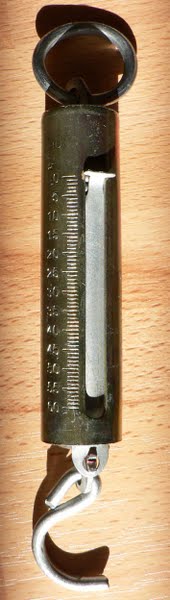 In law and commerce, including product packaging and nutrition labeling, weight means mass. In science and engineering, the weight of an object is the force on the object due to gravity. Its magnitude (a scalar quantity), often denoted by an italic letter W, is the...
-
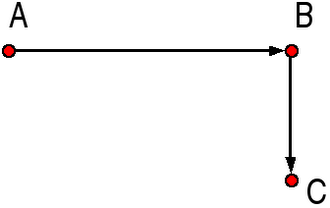 Inertia is the resistance of any physical object to a change in its state of motion or rest, or the tendency of an object to resist any change in its motion. The principle of inertia is one of the fundamental principles of classical physics which are used to...
-
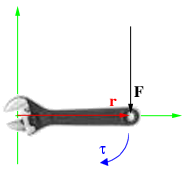 Torque, moment or moment of force (see the terminology below), is the tendency of a force to rotate an object about an axis, fulcrum, or pivot. Just as a force is a push or a pull, a torque can be thought of as a twist to an object.
Loosely speaking, torque is a...

Calculate the force of gravitational attraction? | Yahoo Answers
Calculate the force of gravitational attraction between two spheres of mass 10.1 kg and 45.4 kg that are 38.5m apart.
A 1.18x10⁻¹¹ N
B. 2.06 x 10⁻¹¹ N
C 3.81 x 10⁻¹¹ N
D 4.49 x 10⁻¹¹ N
Share this Post
latest posts
-
 Force of gravitational attraction November 21, 2026
-
 Planet gravitational pull November 12, 2026
-
 Formula for gravitational field strength November 3, 2026
-
 Universal law of gravitational October 25, 2026
-
 Dark energy in Space October 16, 2026
-
 Newton Calculation October 7, 2026
-
 Gravitational attraction formula September 28, 2026
-
 Dark Matters September 19, 2026
-
 Earths gravitational pull September 10, 2026